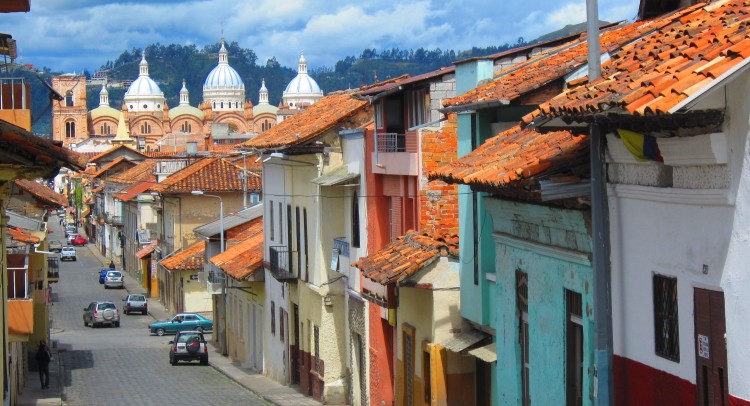
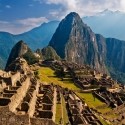
The itinerary that was made for us to include all of the areas that we wanted to visit was excellent, you did a great job in fitting a lot into a 3 week period....... There was no one stand out highlight of our trip as we enjoyed every place we visited and they were all individually exciting and quite different. If we had to pick one it would be a toss up between Easter Island and Machu Picchu. Thank you for all of the organization that went into our trip, we did not have to worry about any aspect other than to turn up at the allotted time and someone would look after every detail for us.
Many Thanks
A Chile vacation is a good idea. Period. The long, thin country stretches
through an incredible range of variety from the bone-dry desert region of
Atacama in the North to the blue-white glacial walls of Patagonia in the
South. You’ll be guaranteed a wonderful, memorable experience if you
take a Chile tour, or travel independently. But just like anywhere in the
world, Chile’s got a couple of things that you should stay clear of.
Here are some Chilean warning flags.
Mentioning where Pisco sour came from
If you’re in a Pisco growing region like the Elqui Valley, be careful
what you say to proud nationalistic Chile vineyard owners. There’s
been a bitter feud between Chile and its neighbour Peru for centuries as
to the origins of the drink, with each country claiming that the other stole
it. In fact, history indicates that Peru was the first to begin Pisco production
when vines were brought over by the Spanish viceroy, but you’d do
well to avoid mentioning this.
Talking about Pinochet
Ruling Chile with an iron fist in a dictatorship that ran between 1973 and
1990, General Augosto Pinochet replaced the democratically elected Salvador
Allende. Human rights violations on a terrified population ensued for decades.
According to Thor Halvorssen, President of the Human Rights Foundation;
“He shut down parliament, suffocated political life, banned trade unions, and made Chile his sultanate. His government disappeared 3,200 opponents, arrested 30,000 (torturing thousands of them) ... Pinochet’s name will forever be linked to the Desaparecidos, the Caravan of Death, and the institutionalized torture that took place in the Villa Grimaldi complex."
The Chilean population is still in shock from what happened only a couple of decades ago. If you want to talk about it, it may be best to wait for them to broach the topic.
Mining
An excellent prop for the strong Chile economy, mining is bringing home
the bread to many tables around the country. However before you rush down
a mine shaft to see what it is all about, you should check out the safety
record of the mining company. On August 5th 2010, the Copiapo gold-copper
mine collapsed, leaving 33 Chilean miners trapped 700 metres (2,300 feet)
from the surface. The miners were eventually reached by a 624 metre drilling
operation into a side-shaft, but this incident served to illustrate the
poor safety record in Chilean mining, which on average costs the lives of
34 people a year, according to state regulatory agency SERNAGEOMIN.
Surfing at El Buey, Arica
Unless you are an expert, stay watching from the shore at Chile big-wave
surfing break El Buey. Surfers deem it one of the most dangerous waves in
the world, breaking onto an exposed sharp rock reef with strong rip-tides
ready to pull you out to sea.
Avalanches at the 3 Valleys ski resort outside Santiago
Chile Skiing enthusiasts will love making fresh tracks in the back-country
slopes around La Parva, El Colorado and Valle Nevado in the 3 Valleys resort
network a couple of hours outside the capital. However, there is a drawback
to the Chilean Andes’ great snow record; large quantities of snow
bring thundering avalanches. To avoid getting trapped, check out the avalanche-prone
areas with resort staff and if you are going out of bounds, always ski in
a group in which everyone has their own avalanche detector and rescue equipment.
Tap Water
A welcome change from other Latin American countries, tap water in may locations
in Chile is actually drinkable! However, it doesn’t taste too good
and is not recommended as it is heavily chlorinated. Added to this the fact
that in some rural areas the water is untreated, and you’re probably
best sticking to bottled water, and avoiding ice and foods probably washed
in tap water such as salads and un-skinned fruit. If you’re unsure,
you can always ask the locals what to do using either your Spanish or your
best miming skills.
Earthquakes
On February 7th, 2010 the central region of Chile was shaken by an earthquake
that measured a massive 8.9 on the Richter Scale. However, before you get
too worried about Chile perpetually shaking, such extreme phenomena are
rare. The last big quake before 2010 was 50 years previous.
If you are unlucky enough to be caught in an urban area during an earthquake, the following advice is issued by the US Department of Homeland Security website:
“DROP to the ground; take COVER by getting under a sturdy table or other piece of furniture; and HOLD ON until the shaking stops. If there isn’t a table or desk near you, cover your face and head with your arms and crouch in an inside corner of the building. If outdoors, stay away from buildings, streetlights and utility wires.”
None of these things should be reason to put you off your Chile vacation. When you step off the plane or cross the border, you’ll be starting the adventure of a lifetime. With a bit of awareness and planning you can avoid these 7 things, or at least be ready to deal with them when they happen.
Author: Jon Clarke - Escaped to Peru / Escaped to Latin America